


More Than Track 13: Dina Rae’s Lasting Legacy
- Muzikscribe

- May 31
- 6 min read

Before fans fully knew her name, they knew Dina Rae’s voice. It echoed through some of the most iconic hip-hop records of the late ’90s and early 2000s — smooth, haunting, and impossible to miss. After repeatedly appearing on Track 13 across major releases with Eminem and D12, fans gave her a name that became part of rap history: “The Track 13 Girl.”
Raised in Los Angeles, Dina’s foundation started in dance, choreography, and performance culture long before major studio sessions. That background gave her the rhythm, emotion, and presence that later made records like “Superman,” “Drug Ballad,” and “Pimp Like Me” stand out — bringing melody and vulnerability to some of hip-hop’s most intense moments.
But her story never stopped at features. From engineering and vocal production to radio, DJing, and independent releases, Dina Rae quietly evolved into a multi-layered creative force. Whether working alongside names like Kurupt and the Black Eyed Peas camp or building her own catalog, she’s remained rooted in emotion, authenticity, and longevity.
Dina Rae’s legacy isn’t just tied to nostalgia — it’s tied to a voice that helped define an era and still resonates today.
What were your earliest steps growing up in L.A. that shaped you into both a vocalist and songwriter before any industry attention?
Growing up in Los Angeles, dance and choreography were actually my first entrance into entertainment before the music industry fully knew me as a vocalist. I grew up around Regina’s, where major artists and groups would constantly rehearse, so I was exposed very early to professional performance environments, choreography, rehearsals, and stage discipline.
I remember groups like Bell Biv DeVoe rehearsing “Poison,” and artists like The Pharcyde being around that environment as well. Being around dancers, choreographers, performers, and musicians taught me timing, rhythm, stage presence, and how music emotionally connects with people in real time.
Dance gave me an understanding of emotion and musicality before I was even deeply involved in recording. Eventually, that environment naturally evolved into singing hooks and being in studio sessions around Los Angeles. Fatlip was actually one of the first people to record me, and from there I started doing hooks around L.A. before eventually connecting with Eminem.
Before major placements, how were you developing your sound and identity as an R&B artist on your own terms in the studio?
I was running around Los Angeles early on, singing hooks for a lot of local artists and groups — just getting my chops up in the studio, learning session etiquette, becoming comfortable behind the mic, and figuring out who I was creatively. Those early sessions were really my training ground.
How did your early studio work lead to your first major breakthrough opportunities and connections in the hip-hop world?
A lot of it came from relationships, consistency, and simply being around creative environments constantly. Once people heard my voice and songwriting ability, word started spreading organically. I became known as someone who could bring emotion, hooks, melody, and atmosphere to records.
You became widely known for key collaborations like “Cum on Everybody,” “My Name Is,” “Drug Ballad,” and “Superman” — how would you summarize that entire Eminem-era chapter and what it did for your career?
That era changed my life creatively and professionally. Hearing my voice on the radio for the first time and being part of those records during such an iconic time in music history exposed me to a global audience and connected my voice to some of the most recognizable hip-hop records ever made.
Beyond the visibility, it taught me a tremendous amount about artistry, storytelling, studio discipline, and emotional delivery.

There’s also the D12-era work, including appearances on “Pimp Like Me” from the multi-platinum album Devil’s Night — what was that creative environment like compared to your solo sessions?
The D12 environment was chaotic in the best creative way. There was humor, unpredictability, raw energy, and experimentation happening constantly. Everybody brought huge personalities into the room, and that energy pushed you creatively. It was less about perfection and more about capturing personality and moments in real time.
You were often associated with landing on “Track 13” across major releases — how did that nickname start, and did it become something you embraced or just something the culture attached to you?
It became one of those organic things the fans noticed before I even did. People started realizing I kept appearing on Track 13 across multiple major projects, and eventually it became almost like a signature.
I didn’t plan it, but I embraced it because it represented consistency and presence during such an important era in hip-hop. It became part of the culture surrounding those albums and part of my identity with the fans.
What do you feel your vocal tone and presence specifically brought to those records that made you such a recognizable feature voice in that era?
I think my voice brought emotion, vulnerability, femininity, melody, and contrast in a way that balanced the intensity of those records.
Eminem once told me there was something special about my voice and that the fans respected me on those songs, and that always stayed with me creatively. I think those collaborations became timeless because there was real chemistry and emotion in the music.
Outside of those high-profile placements, what part of your artistry has always defined you the most as Dina Rae beyond features?
I think my dance background actually set the foundation for everything creatively. Growing up in the dance world around choreography, rehearsals, and performance culture in Los Angeles taught me rhythm, timing, emotion, and stage presence before I was even deeply in the studio world.
How did you transition from being primarily a featured vocalist into also stepping into production and engineering work using tools like Pro Tools?
It started after getting screwed over by one of my engineers in Detroit and having songs stolen and sold. That gave me the hunger to learn how to record myself so I could control my own work creatively and professionally.
Eventually, I realized that after years in studios, I had naturally developed a strong ear for vocal production. I genuinely started loving helping artists shape emotion, delivery, harmonies, and overall performance in the booth. That transition happened organically because I loved the creative process beyond just singing.
What changed in your creative control and workflow once you started handling more of your own recording and sound design?
Everything changed once I started learning Pro Tools and becoming more hands-on in the studio. Kurupt was really the person who got me comfortable in that environment creatively and technically.
A lot of that growth happened at his studio, where I was around artists like Ras Kass, Tash, MC Eiht, King Tee, and members of Compton's Most Wanted — cutting vocals, learning session flow, understanding production, and sharpening my ear creatively and technically.
At the same time, I was singing hooks while recording and producing them simultaneously, which gave me a whole new sense of empowerment creatively.
Especially after going through so much surrounding my Motown album that never got released, finally being able to control my own sessions and creative process changed everything mentally and artistically.
That skill set eventually allowed me to reconnect with the Black Eyed Peas camp, where will.i.am found great use for me recording artists he was developing — and eventually the Peas themselves. I’m currently working on a solo project with apl.de.ap.
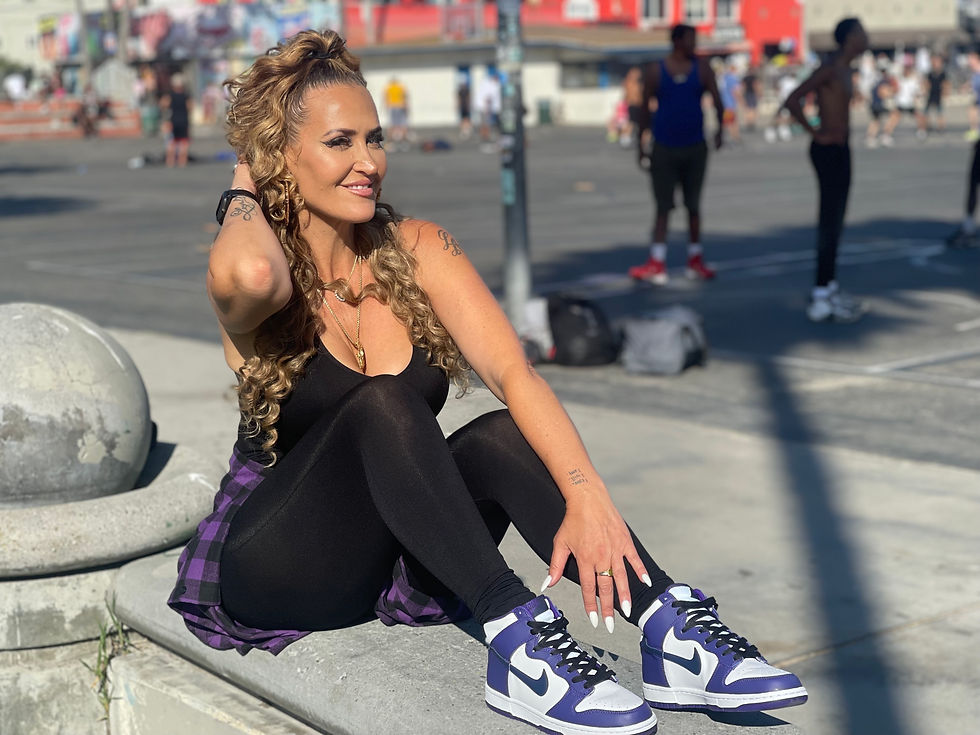
What led you into DJing and your radio work at KJLH 102.3, and how did that expand your understanding of the industry beyond recording sessions?
Around that time, Ricky Waddas from KJLH remembered me from my Motown promo run with Akon and reached out, offering me a position as a personality at the station. That opportunity expanded my understanding of the industry beyond recording sessions.
Radio and DJing taught me audience psychology, programming, timing, transitions, and how records connect with people in real time outside the studio. It also gave me a deeper understanding of branding, culture, and curating emotional experiences through music. In a lot of ways, DJing became another form of storytelling for me, just like songwriting and vocal production.
Looking at everything — from the Eminem and D12 features, the “Track 13” identity, radio, DJing, and independent releases like One of a Million and later singles — what defines Dina Rae at the core today?
At the core, what defines me is resilience, evolution, and authenticity. I’ve lived multiple chapters in this industry — major label artist, featured vocalist, songwriter, vocal producer, engineer, radio personality, DJ, and independent creator — and through all of it, I’ve stayed connected to the love of music itself.
I genuinely love creating emotion through sound. Whether that’s through vocals, songwriting, vocal production, artist development, or curating live DJ experiences, it all comes from the same creative place.
I think my story is really about longevity, adaptability, and continuing to evolve while staying true to who I am artistically.


Comments