


STILL COLD AS ICE: Ice-T Returns to Rap With Criminal Migraine and Nothing Left to Prove

Updated: Aug 20
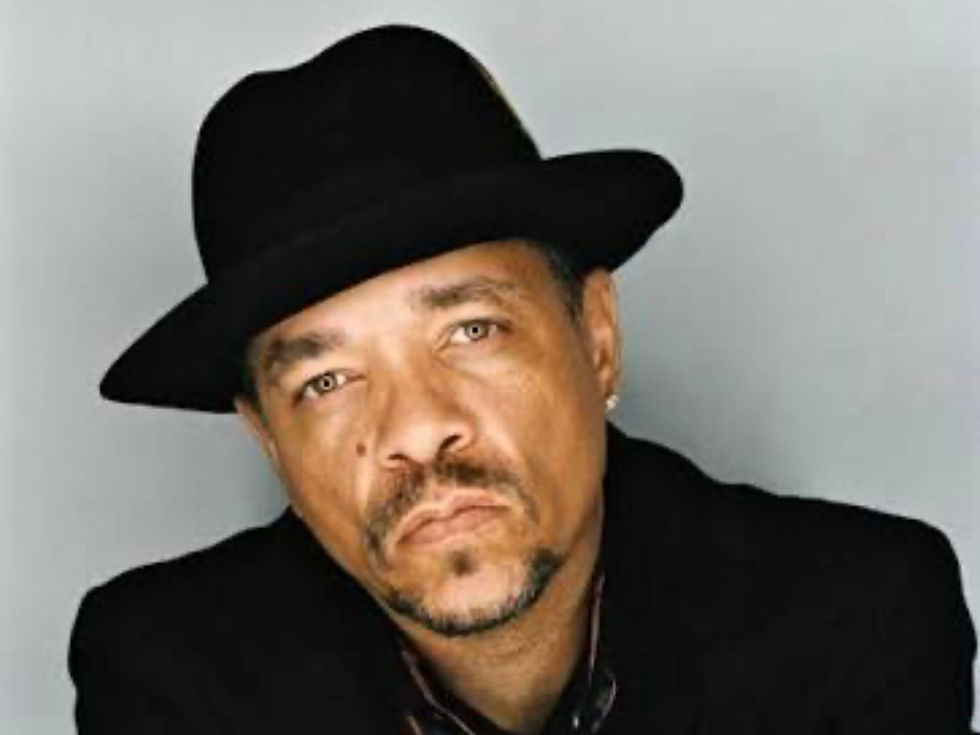
Ice-T has spent more than four decades making survival sound like an art form. Before television made him a weekly fixture in millions of homes, before Body Count turned heavy metal into another weapon in his arsenal, and before Hollywood expanded his résumé, Ice-T was already changing the language of West Coast hip-hop. “6 ’N the Mornin’” helped establish a street-reporting style that would become foundational, while albums like Rhyme Pays, Power and O.G. Original Gangster proved that vivid storytelling, social observation and game could coexist on the same record.
Then Ice did something few pioneers get to do: he kept moving.
Film became television. Rap shared space with rock. Body Count became a Grammy-winning institution. Law & Order: Special Victims Unit introduced Detective Fin Tutuola to generations who may not have known the MC had already been telling cinematic stories long before he carried a badge on screen. But solo hip-hop was different.
For more than two decades, Ice-T largely left that chapter alone. Not because he had nothing to say, but because the music around him stopped inspiring him to say it. Then the temperature changed. Veteran lyricists began making noise again, working with Treach during the pandemic rekindled something, and the MC who helped write one of rap’s original West Coast rulebooks started hearing beats differently. Enter Criminal Migraine.
Across 23 tracks, Ice isn’t attempting to cosplay his younger self or manufacture an ’80s throwback. The title itself speaks to something deeper: what happens when a man survives the streets, escapes the circumstances that created him, builds a legitimate life—and discovers that survival mode doesn’t necessarily leave when the danger does.
That tension runs through records including “It’s What You Say,” “No Competition,” “Hardcore MF,” “Hustle Hard,” “Ego,” “To Be A Man,” “Lost My Mind” and “No Regrets.” And Ice doesn’t make the trip alone. Treach, Smoothe Da Hustler, Ras Kass, Bumpy Knuckles, Big Bub, Zieme, Fedie Demarco, CJ Mack, Murkemz, Money Reeks and others enter the picture, while Coco appears on “No One Ever Wins.”
It is grown-man rap without pretending grown men stop wrestling with who they used to be.
And Ice-T is putting serious weight behind it. He says Criminal Migraine is better than every previous Ice-T album combined—a hell of a statement from the man who made O.G. Original Gangster.
But maybe that confidence is the story.
At this point, Ice-T doesn’t need another album to validate his place in hip-hop. He helped build the house. What makes Criminal Migraine compelling is hearing one of the culture’s architects walk back through the front door because he genuinely believes he has something left to add.
Rap. Rock. Film. Television. Body Count. Entrepreneurship. Ownership.
Ice-T has never stayed in one lane long enough to be defined by it.
Now, with Criminal Migraine, the circle comes back to where much of it started: a beat, a microphone and Ice with something to say.
After all these years, it’s still not about how much you say. It’s what you say.
Q. Before there was an Ice-T blueprint for West Coast street rap, you were still finding your own voice and figuring out what Los Angeles hip-hop could sound like. When “6 ’N the Mornin’” happened, did you have any sense that you were helping create a lane generations of MCs would eventually travel?
Ice-T: Not at all. That record came from survival storytelling. Before that, I was trying to rap like New York artists because there really wasn’t an L.A. blueprint yet. Then Russell Simmons told me, “You can’t be New York — you’ve got to represent L.A.” Hearing Schoolly D’s “PSK” gave me the green light to talk about street life directly, and that became “6 ’N the Mornin’.”
Q. Rhyme Pays helped establish the foundation, while O.G. Original Gangster became one of those records whose fingerprints can still be heard decades later. When you listen to the generations that followed, where do you hear the clearest echoes of what those albums helped introduce?
Ice-T: Those albums helped open the floodgates for street storytelling in rap. Back then there weren’t many blueprints. Every generation builds off the previous one. Rakim changed rhyme patterns. Das EFX changed flows. We helped make it acceptable to talk about real street experiences in hip-hop.
Q. You’ve always been particular about skill—not simply somebody’s ability to make a record, but actually knowing how to MC. Was there a point when hip-hop moved far enough away from the fundamentals you valued that you no longer felt creatively compelled to participate?
Ice-T: People stopped respecting skill. Hip-hop was always about skill — DJing, rhyming, breaking, graffiti — all of it required talent. Then it became about saying anything over a beat. Everybody heard Jay-Z say he didn’t write his rhymes and thought they could do it too. But Jay is special. Everybody can’t do that. Now lyricism is making a comeback, and that’s what brought me back.
Q. Then something changed. After roughly two decades away from making a solo hip-hop album, you started hearing Clipse, Nas, Ghostface, Raekwon and other lyricists making noise again, while working with Treach helped reignite that competitive spark. Was that when you knew Ice-T the MC still had unfinished business?
Ice-T: Hip-hop went through a lot of different phases that just didn’t connect with me creatively. It went from the golden era into ringtone rap, autotune, trap, mumble rap — a lot of it lost the lyricism I respected. But now I’m seeing people rap again. Clipse, Nas, Ghostface, Raekwon — artists I respect started dropping records again. Plus, I’d been working with Treach during COVID and the energy came back. I realized I still had passion for it.

Q. The title Criminal Migraine says plenty before the needle even drops. After surviving one life and building another, how much of this record deals with the reality that you can leave the streets physically while certain instincts, reflexes and survival mechanisms remain in your head?
Ice-T: It’s very personal. Anybody who came from the streets understands that transition from survival mode into legitimate life. Your brain still reacts the old way sometimes. You think, “Back then I would’ve handled this differently.” But now you’ve got family, responsibilities, things to lose. The album is really about getting out of the game mentally, not getting deeper into it.
Q. “It’s What You Say” almost sounds like a mission statement for how you’ve always approached MCing: make the words count instead of overcrowding the record just to prove you can rhyme. At this stage, has knowing what not to say become as important as knowing what to say?
Ice-T: That record represents my philosophy on rap. It’s not how much you say — it’s what you say. I wanted to tell the Ice-T story as simply and efficiently as possible in two verses. Rakim, EPMD, Chuck D — those artists understood that substance matters more than just cramming words together.
Q. You’ve made a bold claim that Criminal Migraine is better than all your previous Ice-T albums combined. Considering the history attached to that catalog, what does this album contain—in perspective, maturity and pure MC ability—that makes you willing to put that statement on the table?
Ice-T: Because this album is focused. It’s mature. It’s honest. It’s lyrical. It’s everything I’ve learned from every phase of my life put into one project. When people hear it, they’ll understand why I said that.
Q. Long before television made you familiar to millions, your records were already cinematic—characters, scenes, consequences and entire neighborhoods could live inside a verse. Looking back, was acting really a new chapter, or had Ice-T essentially been directing movies with words all along?
Ice-T: I think the music was already theatrical before acting happened. My records were never really meant for dancing — they were meant to paint pictures. More like audio books than club records. Acting and music are separate to me, but storytelling connects both worlds naturally.
Q. Body Count’s “Cop Killer” became one of the most controversial records in American music, but beneath the outrage was a protest record addressing police brutality. More than three decades later—when everybody carries a camera and those encounters can be witnessed in real time—how differently do you view what that song was saying?
Ice-T: I never made records trying to be controversial. “Cop Killer” was a protest song about police brutality in Los Angeles. At the time people acted shocked, but now everybody’s got cameras on their phones and the world can actually see what was happening. The biggest difference today is accountability.
Q. Hip-hop opened the door, but you never allowed success in one lane to make you comfortable—Body Count, acting, television, touring and now another solo record. After all these years, where does that need to keep creating still come from?
Ice-T: Artists create. That’s just what they do. I compare it to Stephen King writing books nonstop. Some people are academically inclined, some athletic — I’m artistically inclined. The music tells me what to write. I hear a beat and instantly see the story.
Q. The business you entered and the one artists face today are almost two different industries. Labels once carried much of the machinery; now artists are expected to record, market, distribute and build audiences themselves. What has streaming-era independence given artists—and what has it taken away?
Ice-T: Completely different. Back then the label handled everything after you turned in the album. Now the artist has to be the label too. Streaming changed the game — and honestly, I think streaming is the biggest ripoff in music history. But creatively, it still feels good being in the studio making records again.
Q. That makes the OG Network feel like more than another business venture—it connects directly to ownership. After spending a lifetime watching corporations control distribution and access, what did you want to build for creators that the traditional system wasn’t giving them?
Ice-T: We wanted to create a space where creators could upload content, build audiences, and monetize independently without worrying about somebody shutting them down. It’s about ownership. We own the servers, the platform — everything. That was important to me.
Q. From losing your parents young and surviving the streets to becoming a foundational MC, actor, frontman, entrepreneur and cultural elder, you’ve lived enough chapters for several careers. Strip away the records, television credits and accolades—what is the one thread connecting the kid who had to survive then with the man still creating today?
Ice-T: Survival. Everything I’ve done comes from survival mentality. I came from being homeless and losing my parents young. I’ve never felt comfortable enough to stop working. Rap opened doors, but the mentality never changed. I still wake up every day trying to create something meaningful.


Comments