


Jahi: Life, Legacy, and the Art of the Journey

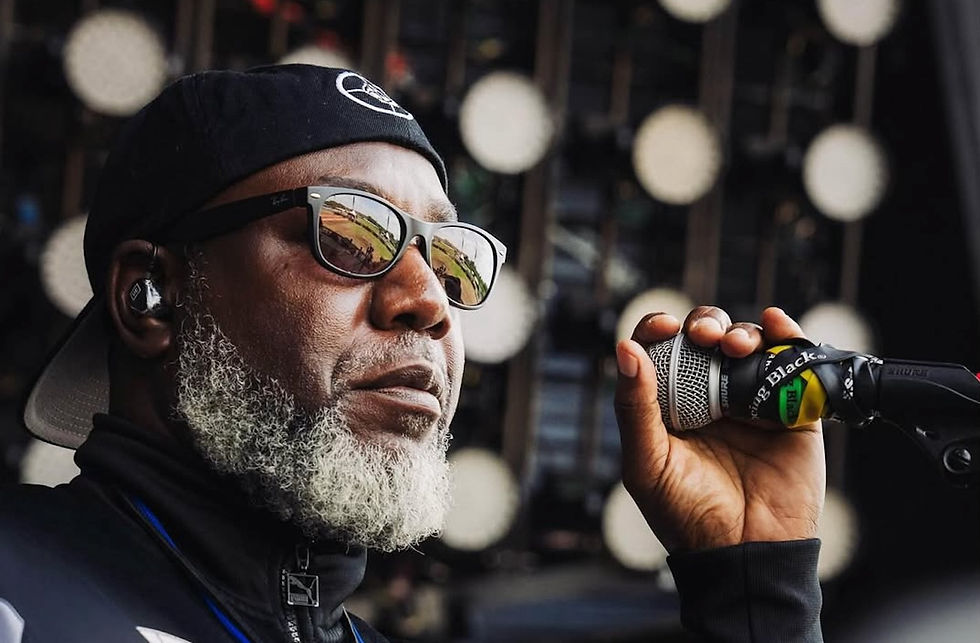
Jahi doesn’t just make music — he moves through it. From Cleveland corners to Oakland streets, from stadiums with Public Enemy to the soul of Dakar, Senegal, he’s lived hip-hop as a global practice, not just a career. JOURNEYMAN RAP and ‘The Microphone Journeyman: The Journey Continues’ aren’t nostalgia trips — they’re statements from a man who’s seen, felt, and survived more than most artists ever will.
This is a conversation about freedom, perspective, and growth. It’s a look behind the lyrics at the life, the travels, and the unapologetic truth of a culture keeper still sharpening his craft in his 50s. Step in, press play, and meet Jahi — a voice that carries history, hustle, and the pulse of what it really means to journey.
Q: “Simple Life” feels like a statement piece in its own quiet way — what made this the right song to introduce people to JOURNEYMAN RAP?
Jahi: “Simple Life” came in a dream first, and was written in Oakland, CA. It was recorded in Honolulu, Hawaii. I knew I would make it to Senegal to record the music video. As an MC in my 50s, the idea of “Simple Life” is threefold: one, it’s a love letter to Senegal; two, it’s a call for Pan-African unity; and three, it’s a celebration of my 19th album, which has truly been a journey.
Q: There’s a real ease and intention in “Simple Life.” What kind of headspace, lifestyle, or personal truth were you trying to capture with that record and visual?
Jahi: I’ve wanted to venture and explore in the Afrobeats space, and I wanted to do it in an authentic way, which gives an example of what mature hip-hop could sound like. Visually, being in Senegal was life-changing. Having the African Renaissance Monument as a backdrop, which is the largest statue in Africa, was breathtaking.
The headspace I was in was simply freedom. There’s no better sense of freedom than being out of America and in the motherland. The truth I wanted to convey in the video was the beauty of Africa — to show that human hands, human eyes, and the natural beauty of Africa could never be eclipsed by AI.
Q: Between “On Time” and now “Simple Life,” this chapter feels rooted in movement, peace, and perspective. What do these songs say about where you are in life right now?
Jahi: What it says is I’ve turned a corner. I am truly comfortable in my own skin and in my freedom of delivery. It’s true that the more you work at something, the better you get. The whole album JOURNEYMAN RAP is some of my best work because it’s the result of all my life experience. “On Time,” “Simple Life,” and the entire album continue the conversation of what we as a culture look and sound like over 50.
Q: JOURNEYMAN RAP is such a lived-in title. At this stage of your life and career, what does being a “journeyman” mean to you beyond just longevity?
Jahi: It means there’s no destination. The journey is the experience. It’s not about attaining anything — it’s about continuing. It’s about not giving up. It’s about being fully present and enjoying the experience of creating music. Once I really tapped into the idea of the journey, I found new joy in my craft.
I drifted even further from what the industry thinks and truly traveled deeper in what it means to be a culture keeper. To journey means to go, and it also means you don’t give up or sit still. Once I owned this moniker, it opened another level of my humanity.
Q: This project doesn’t sound like someone trying to relive an old era — it sounds like someone still evolving. How has your relationship with hip-hop changed now that you’re creating from experience instead of proving yourself?
Jahi: Having been to 45 countries as a practitioner of hip-hop culture, it’s truly in the fabric of my creations. My relationship with hip-hop remains the same — I’m on the culture side. The more I stay there, the more I overstand what it means to represent the culture over the industry. It creates a fresh perspective and helps me grow, even in the topics I cover.
I’m in my 50s, and in the song “Journeyman Rap” I say: “Over 50 rap / not in a race with young folks, that’s a fact…”
Q: You’ve spent years making socially conscious, spiritually grounded music. What has it meant for you in this season to also lean into joy, groove, and records that simply feel good to live with?
Jahi: It’s a lifestyle. At a time when the outside world wants to dupe us into thinking the whole world is about disease, war, and drama, I know differently. I embrace joy as a human being first — in my relationships, in my character.
It takes courage to stay socially conscious not just in music, but in life overall. As a result, my records and lyrics represent it well at this stage. I’m not juxtaposing myself to any other lane. I’m running my own race, being a better human first, and allowing that to flow naturally into my artistic expression.
Q: Your work has always carried a strong sense of place — from Cleveland roots to Oakland soil and now global travel. How has movement shaped the way you hear, write, and live your music today?
Jahi: I’ve always seen myself as a world citizen. I never depended on the locale where I lived to be my main source of inspiration or fanbase. Now it’s about Africa. I’ve been a Pan-African since 1989. Africa is an incredible landscape to explore, and hip-hop culture’s roots are on the continent.
Being able to travel the globe has been the greatest blessing my art has given me. Because of that movement, I think I serve as a reminder and inspiration for many to get out of a local mindset and make global moves over local ones.

Q: You’re speaking from Dakar, Senegal during this chapter — what has that experience stirred in you creatively, culturally, and spiritually?
Jahi: The African Sufism in Senegal is deep. I still haven’t found all the right words to describe it. I made an attempt in my new book, ‘The Microphone Journeyman: The Journey Continues,’ because I want people to know Africa is incredible — you won’t feel it watching it on YouTube; you have to go.
Dakar was one of the most peaceful places I’ve ever been. The people, their communal way of living, the ease of building with fellow Africans, the hospitality — I truly felt at home. Spiritually, I’ve grown. The way Islam is practiced in parallel to Wolof and Sufism is esoteric yet down-to-earth. I prayed with many in Dakar, and I studied with many. Africa unlocks a level of your divine self that no other place on earth can for me.
Q: Your new book, ‘The Microphone Journeyman: The Journey Continues,’ suggests that this path is bigger than music alone. What stories or truths were you ready to explore on the page that maybe songs couldn’t hold the same way?
Jahi: Touring with Public Enemy in 2025 across 25 countries, performing stadiums with Guns N’ Roses — being with the most important rap group of all time while still speaking truth to power — those experiences can’t be fully captured in songs. I also wrote the book like a journal so readers could see an intimate side of me: how to stay healthy, learning about different cultures, and processing life on the road.
I also make a call to action for hip-hop culture to visit Africa and respect our elders. Chuck is 66, Flav is 67 — they’re in rare air. The book lets me share the full scope of that experience in a way rhymes alone couldn’t.
Q: From PE 2.0 and your connection with Chuck D to your solo work now, you’ve carried both legacy and independence. How do you balance honoring what came before while still staying fully in your own voice?
Jahi: By being myself. Chuck D is my hero, but I’m not trying to be him or the next Flavor Flav. I strive to be the best Jahi. I honor my ancestors and elders by giving them flowers and maximum respect. I honor myself by learning, being humble, and continuing to forge my own path. That’s what being a journeyman is all about.
Q: There’s a difference between staying active and staying creatively alive. What’s been the key to keeping your art, your purpose, and your spirit in motion this deep into the journey?
Jahi: They go hand in hand. I don’t create just for creation’s sake. There’s always a message, a source of hope, and inspiration in my work. Being active is relative — I could perform for five people or five thousand and feel the same joy sharing my art.
After 50, you realize if you stop being active or creative, you risk going stale. I may not do another album per se, but I want to explore different sounds, work with African bands, and write for others. That way, I can use different voices and mediums to move in new ways. I will never let the culture have me all rapped out. I will always, in one way or another, be of service to my culture and community. My word is bond.
Q: If “Simple Life” and JOURNEYMAN RAPare the soundtrack to this current chapter, what would you say this era of Jahi is really about — as an artist, a thinker, and a man still moving through the world with intention?
Jahi: In one word: growth. This era is about embracing all that I am, all my experiences, and truly living in my passion and purpose. The road hasn’t been smooth, but it’s been worth every second. JOURNEYMAN RAP and ‘The Microphone Journeyman: The Journey Continues’ are out now. As I share with many comrades and in my book signings, I say the same thing: enjoy the journey.
Jahi New Book – ‘The Microphone Journeyman: The Journey Continues’
Website: iamjahi.com
Instagram: @jahi.iam


Comments